


FLASH ALERT: WARNING TO NIGERIAN CIVILIANS, BOKO HARAM FACTION ISSUES 72-HOUR ULTIMATUM TO NIGERIAN GOVERNMENT TO MEET DEMANDS OR EXECUTE 416 CAPTIVES
Sasha Sánchez, Kendall McElwee, Alessandro Portolano, Insa Reblin, Michela Sereno, AFRICOM/CENTCOM Teams
Elena Alice Rossetti, Lizel Klaasen, Editor; Jennifer Loy, Chief Editor
April 21, 2026
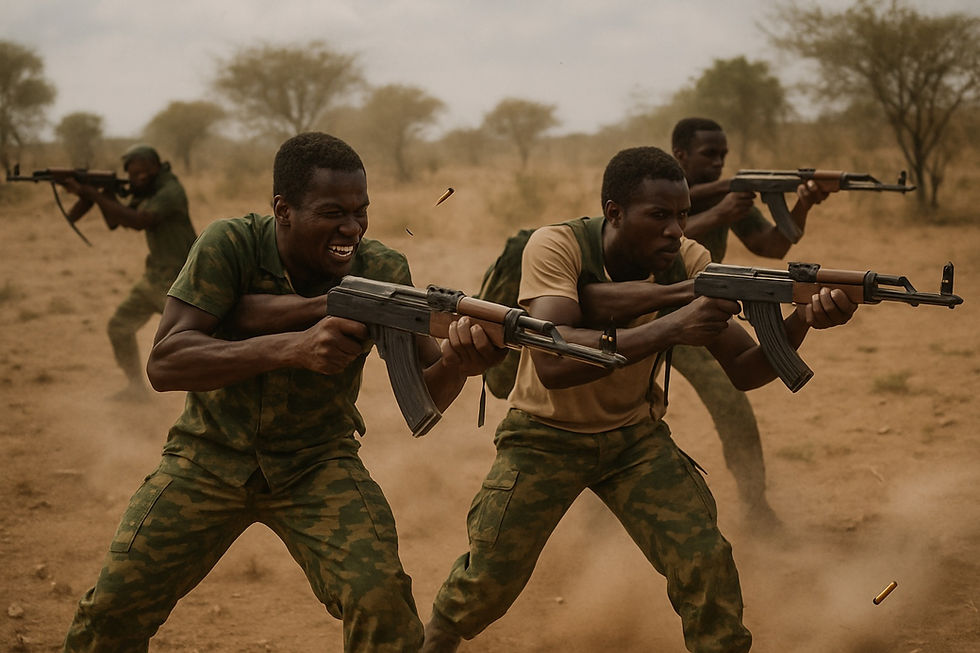
African Insurgents[1]
The Counterterrorism Group (CTG) is issuing a FLASH ALERT to civilians in northeastern Nigeria, Nigerian government officials, Borno South Youth Alliance (BOSYA) following a reported ultimatum issued by a Boko Haram faction on April 19, 2026. The group released a video with specific demands, including a ransom request of ₦5 Billion, to the Nigerian government and BOSYA threatening to execute 416 captives if the parties do not meet these demands within 72 hours. The threat is the latest in repeated acts of violence committed by Salafist Jihadist groups in the Sahel region. At the time of publication, the Nigerian government has not issued a response, while the hostages remain in captivity. BOSYA urged top government officials and the Nigerian army to take immediate action to save captives. The threats pose an imminent danger to civilians, requiring quick, high-stakes decisions from the Nigerian government.
CTG is on HIGH alert after a Boko Haram faction issued threats to execute 416 captives in northeastern Nigeria by a Boko Haram faction, if the Nigerian Government and civilian-led pressure group and mediator, BOSYA, do not adhere to specific demands within 72-hours. The ultimatum VERY LIKELY signals an escalation in violence and coercive tactics. Military rescue attempts will VERY LIKELY increase risk to hostages, as the group explicitly warned against forceful military recovery efforts. Limited government capacity will LIKELY delay coordinated military responses, VERY LIKELY increasing public pressure and tensions over the coming hours. The ultimatum and media messaging will VERY LIKELY cause fear and instability in affected areas and populations. The Boko Haram faction will VERY LIKELY execute hostages if the parties mentioned in their video don't meet their demands, VERY LIKELY fragmenting the region further and corroding public trust in the Nigerian government.
Introduction
On April 19, 2026, a faction of the Nigeria-based terrorist group Boko Haram, also known as Jama’atu Ahlis Sunna Lidda’awati wal-Jihad, published a video on social media, issuing a 72-hour ultimatum for the Nigerian government to accept their demands before they start executing 416 captives, mostly women and children. The group warned against military intervention, stating that it would worsen the situation. Amnesty International Nigeria reports that terror groups abducted at least 1,100 people from northern states between January and April 2026. The most notable mass abduction attack happened in 2014, when Boko Haram militants kidnapped and held 276 girls captive from Chibok Secondary School in Borno State, Nigeria. On March 3, 2026, Boko Haram militants abducted more than 400 people from Ngoshe town in Gwoza local government area of Borno state. In recent years, Jihadist militant groups in the Sahel have committed murders, bombings, abductions, and sexual violence.
Analysis
Emotional Leverage through Social Media Platforms
Boko Haram’s use of social media to spread hostage videos and ultimatums will very likely serve as an emotional leverage mechanism to pressure the Nigerian government into complying with their commands particularly when victims are women, children, or other at-risk populations. By publicizing hostages and imposing strict deadlines, the group will likely trigger high-profile crises that attract both domestic and international attention. Boko Haram is likely transitioning from physical territorial control to the information domain, where it can leverage media dissemination and public sentiment. The strategy is likely intended to gain immediate demands, such as ransom payments, and also to deter military rescue operations by raising the risk of mass casualty outcomes. This will likely lead to the further erosion of public trust in state security apparatuses and a perceived legitimacy crisis for the central government, especially if authorities appear unresponsive or incapable of preventing executions.
Exploitation of Nigerian Civilians
Boko Haram-affiliated groups will very likely continue to target northeastern Nigerian civilians, and their near-term strategy will likely focus on the threatened execution of hostages as a coercive tool. Rather than relying on individual attacks, the group will likely prioritize high-visibility abduction operations to secure captives do use in ultimatums. Large-scale civilian abduction campaigns will likely increase psychological pressure on the Nigerian government and public, with execution threats serving as an escalation mechanism. This psychological warfare will likely degrade morale and serve as a recruitment tool as it will outline the state's inability to protect its most vulnerable citizens while demonstrating the insurgent’s capacity to influence Nigeria's national security.
Historically low success rates of counterterrorist operations and limited military capacity will likely increase the chances of agreement to terrorist demands, likely forcing repeated state concessions and financial pay-outs through ransoms, ultimately leading to the institutionalization of kidnapping as the primary insurgent revenue stream. The prolonged economic benefits stemming from this revenue stream will very likely result in an increase in terror organizations’ operational capabilities through high-tech weaponry such as weaponized unmanned systems and AI-enhanced communications servers. These operational changes will very likely reduce the Nigerian’s military traditional advantage, likely forcing the Nigerian government into a prolonged defensive posture.
Impact on the Nigerian Counterterrorism Strategy
Boko Haram’s ongoing operations will likely pressure the Nigerian government to prioritize reactive interventions at the cost of strengthening counterterrorism strategies. Military and security services will very likely redirect troops toward time-sensitive hostage rescue operations, vulnerable communities protection, and containment of insurgent movements, likely limiting offensive counterinsurgency tactics. Nigerian institutions will likely have to reevaluate their overall counterinsurgency strategy, likely expanding rapid response units, increasing reliance on local intelligence from civilian vigilante groups, and reallocating funding from long-term stabilization programs to immediate crisis management efforts.
These reactive responses will very likely expose operational gaps and structural capability problems within Nigeria’s counterinsurgency framework. Key vulnerabilities will likely include limited intelligence capabilities in rural areas, inadequate air mobility for rapid troop deployment, fragmented intelligence-sharing between military and regional actors, and insufficient training and equipment for units conducting hostage rescue operations. Logistical constraints, including poor infrastructure and slow deployment timelines, will likely further reduce operational effectiveness.
Insurgent factions will likely exploit these operational gaps by increasing the frequency and scale of abductions and attacks in northeastern Nigeria. The group will likely adapt its tactics by fragmenting hostages across multiple locations and leveraging publicized execution threats and hostage videos to amplify intimidation and fear among local populations, likely reinforcing the perception of state incapacity to provide security. In response, the Nigerian government will likely remain in a reactive operational posture, characterized by localized troop deployments and short-term security surges, likely failing to disrupt insurgent planning cycles, allowing Boko Haram to retain the initiative. This dynamic will likely erode public trust in governance, very likely creating opportunities for terror organizations in conflict-prone areas.
Regional Actors Response
If Nigeria meets the demands of Boko Haram, regional actors within the Lake Chad Basin Commission, such as Cameroon, Chad, and Niger, will likely express concern over the precedent this sets, as compliance will very likely encourage further kidnappings and strengthen militant financing networks across borders. These states will likely fear an insurgency capable of expanding operations and undermining joint counterterrorism efforts such as reducing weapons factories and neutralizing fighters. This erosion of trust between regional actors will likely allow insurgency groups to operate transnationally, forcing Lake Chad Basin countries to redirect resources away from economic development toward a long-term security crisis.
If Nigeria refuses to comply with the demands, regional actors will likely support President Tinubu’s stance against negotiating with terrorist groups. Regional actors will likely strengthen military readiness along their borders due to the likelihood of retaliatory executions or dispersal of hostages. Cross-border coordination will very likely increase, as neighboring states seek to contain escalation and prevent further destabilization. Optimal alignment with regional allies will very likely lead to Boko Haram-affiliated groups’ cornering, resulting in increasingly desperate tactics in the long-term. This will likely create an opportunity for regional security alliances, such as the Lake Chad Basin Commission, to launch decisive offensives against the groups' cross-border logistical hubs.
Recommendations
The Counterterrorism Group (CTG) recommends that Nigerian authorities improve public communication and keep society updated to build public trust. The government should issue timely public statements about the situation and minimize the impact of misinformation and panic through proactive communication.
Nigerian authorities should establish a crisis communication cell to manage the narrative surrounding hostage situations to provide controlled and empathetic updates to the population to reduce insurgent groups from leveraging their online inactivity.
Nigerian authorities should coordinate with social media operators X and Meta to limit insurgent group's online activities. They should flag and de-platform content related to recruitment campaigns and threats as they erode public trust in the government.
Nigerian security forces and humanitarian partners should prioritize a phased relocation of the civilians impacted by terrorist abductions and intimidation. Efforts should first focus on evacuating women and children living in high-risk areas of northeastern Nigeria, especially in the States of Borno, Gobe, and Adamawa, to humanitarian camps, such as those around the city of Maiduguri.
Nigerian security forces should focus their capabilities in high-density areas of northeastern Nigeria to prevent or limit continued abductions in that area.
Nigerian authorities should make use of BOSYA’s mediator position to better address the situation and act through back-end channels with the insurgents.
Nigerian authorities should strengthen intelligence coordination, enhance community engagement, and increase coordination and collaboration efforts with BOSYA to strengthen their counterterrorism efforts.
The government should invest in surveillance technology and early warning systems (EWS) to better protect and deploy Armed Forces and intelligence services as part of their counterterrorism strategy.
Nigerian authorities should coordinate with the Lake Chad Basin Commission to create a hostage situation framework to have clear outlined rules and protocols for future similar scenarios.
Regional cooperation alliances such as the Multinational Joint Taskforce (MNJTF) should coordinate security and intelligence gathering capabilities to face Boko Haram and other insurgent groups movements in the Lake Chad Basin region.
CTG assesses that the current threat climate is HIGH after a Boko Haram faction threatened to execute 416 captives if the Nigerian government and BOSYA do not meet its demands within 72 hours. The situation will very likely worsen as the lack of governmental responses increases public erosion, benefitting insurgent groups as it likely shows operational vulnerabilities. This threat will very likely hinder the government’s capacity to project its protection in affected areas of northeastern Nigeria, likely emboldening other insurgent groups to carry out similar attacks in hopes of leveraging hostages for economic demands, ultimately capacitating them to plan high-cost offensive against limited military responses.
Analysis indicates that there is a HIGH PROBABILITY that the group will carry out its threats of executions, should demands remain unmet, serving as a tactical catalyst for future mass kidnappings. The threat is LIKELY part of a broader psychological operation to paralyze local administration and prevent deployment and protection of local villages. Strained operational and surveillance capabilities will VERY LIKELY divert Nigerian security and BOSYA resources from broader regional stability to localized hostage crisis management. The Nigerian Government’s lack of communication with society and history of reactive military responses will ALMOST CERTAINLY further decrease public trust and confidence in the government’s ability to protect. The current Boko Haram faction and other active roleplayers will VERY LIKELY use this event to fuel misinformation, ALMOST CERTAINLY increasing fear in society. This event will VERY LIKELY continue to deteriorate the Nigerian Government’s negotiation leverage, intelligence efforts, and counterterrorism strategies, triggering a cycle of reactive military strikes that LIKELY enhance extremist recruitments and operational hostility.
[1] African insurgents, generated by a third-party image database (created by AI)
[2] Boko Haram Issues 72-Hour Ultimatum, Threatens To Execute 416 Captives In Borno, Mostly Women And Children, Sahara Reporters, April 20 2026, https://saharareporters.com/2026/04/20/boko-haram-issues-72-hour-ultimatum-threatens-execute-416-captives-borno-mostly-women
[3] @Borno South Youth Alliance, Facebook, April 19, 2026, https://www.facebook.com/profile.php?id=61556080811682
[4]@pulsenigeria247, Instagram, April 19, 2026, https://www.instagram.com/p/DXWxdBQgirQ/?utm_source=ig_web_copy_link&igsh=NTc4MTIwNjQ2YQ%3D%3D
[5] Nigeria: At least 1,100 People Abducted in Three Months Must be Rescued, Amnesty International, April 2026, https://www.amnesty.org.ng/2026/04/11/mass-abductions-northern-nigeria-1100-kidnapped/
[6] Boko Haram Issues 72-Hour Ultimatum, Threatens To Execute 416 Captives In Borno, Mostly Women And Children, Sahara Reporters, April 20 2026, https://saharareporters.com/2026/04/20/boko-haram-issues-72-hour-ultimatum-threatens-execute-416-captives-borno-mostly-women
[7] @pulsenigeria247, Instagram, April 19, 2026, https://www.instagram.com/p/DXWxdBQgirQ/?utm_source=ig_web_copy_link&igsh=NTc4MTIwNjQ2YQ%3D%3D
[8] Ibid
[9] Boko Haram Issues 72-Hour Ultimatum, Threatens To Execute 416 Captives In Borno, Mostly Women And Children, Sahara Reporters, April 20, 2026, https://saharareporters.com/2026/04/20/boko-haram-issues-72-hour-ultimatum-threatens-execute-416-captives-borno-mostly-women
[10] @AmnestyInternationalNigeria, X, April 20, 2026, https://x.com/AmnestyNigeria/status/2046315584225206516?s=20.
[11] Nigeria: Decade after Boko Haram attack on Chibok, 82 girls still in captivity, Amnesty International, April 2024, https://www.amnesty.org/en/latest/news/2024/04/nigeria-decade-after-boko-haram-attack-on-chibok-82-girls-still-in-captivity/
[12] Nigeria: At least 1,100 People Abducted in Three Months Must be Rescued, Amnesty International, April 2026, https://www.amnesty.org.ng/2026/04/11/mass-abductions-northern-nigeria-1100-kidnapped/
[13] We dried our tears”: Addressing the toll on children of Northeast Nigeria’s conflict, Amnesty International, May 2020, https://www.amnesty.org/en/documents/AFR44/2322/2020/en/
